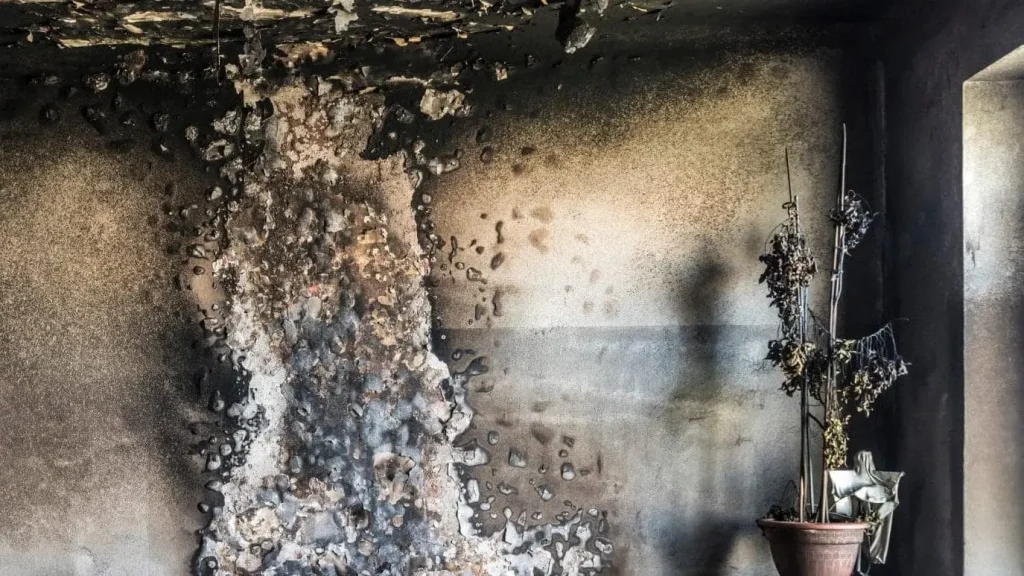
Imagine walking back into your home after a fire. The flames are out, and the fire trucks have long since left, but a heavy, grey reality remains. It’s in the film covering your windows, the black streaks on your ceilings, and most stubbornly that acrid, metallic smell that seems to have soaked into the very bones of the building.
At Restoration-Heroes LLC, we know that “out of sight” does not mean “gone.” In the world of 2026 restoration, we understand that smoke is a chemical invader. Removing it for good requires more than a bucket of soapy water; it requires a deep understanding of molecular science.
In this guide, we take you behind the scenes of our professional process to show you how we bridge the gap between a damaged house and a fresh, livable home.
The 2026 Reality: Why Professional Cleaning is Non-Negotiable
Recent news and scientific studies have shifted the way we view “minor” smoke damage. Following the catastrophic 2025 wildfires in North America, a landmark 2026 UCLA Fielding study revealed that indoor surfaces can retain fire-related pollutants for months after the event. These particles, including heavy metals and volatile organic compounds (VOCs), present ongoing respiratory and neurological risks if not professionally remediated.
Furthermore, the 2026 National Defense Authorization Act (NDAA) recently cited the ANSI/IICRC S520 and S700 standards as the mandatory federal benchmark for indoor environmental safety. This means that “good enough” cleaning is no longer the standard scientific verification of air quality is the new expectation for every homeowner.
Step 1: The Chemical Assessment
Not all smoke is created equal. Before we touch a single surface, Restoration-Heroes LLC identifies the “type” of fire that occurred:
- Protein Fires: Often from kitchen grease. This creates a thin, invisible, but incredibly smelly film that turns yellow and pungent over time.
- Dry Smoke: Fast-burning wood or paper. It produces a powdery soot that is easier to clean but travels into every crack and crevice.
- Wet Smoke: Low-heat, smoldering fires (like rubber or plastic). This produces thick, smeary soot that is highly acidic and will “etch” or eat into your appliances and furniture if not removed within 48 hours.
Step 2: Dry Cleaning – The Secret to Preventing Stains
A common mistake in DIY restoration is applying water or liquid cleaner to soot immediately. This creates a “sludge” that drives the carbon particles deeper into the pores of the wall.
At Restoration-Heroes LLC, we use dry chemical sponges and HEPA-filtered vacuums. These tools lift the soot off the surface without moisture, preventing permanent staining. Only once the bulk of the particulate matter is removed do we move to wet-cleaning with specialized alkaline solutions.
Step 3: Breaking the Odor Code (Molecular Neutralization)
The “smell” of smoke isn’t just an odor; it is millions of microscopic particles trapped inside porous materials like wood, drywall, and insulation. To remove them “for good,” we use a three-pronged technological approach:
1. Thermal Fogging
We use a machine that heats a deodorizer into a fine mist. Because the particles are the same size as smoke particles, the fog follows the exact same path the smoke took into the walls, under the floorboards, and through the attic neutralizing the odor at its source.
2. Ozone Generation
Ozone ($O_3$) is a highly reactive gas. When we run an ozone generator in an unoccupied space, the extra oxygen molecule breaks off and attaches itself to the odor molecules, chemically altering them so they no longer smell.
3. Hydroxyl Generation
For jobs where you need to stay in your home or where sensitive materials are present, we use Hydroxyl generators. This 2026-standard tech mimics the way the sun cleans the atmosphere, using UV light to create $OH$ radicals that destroy odors and pathogens safely while the room is occupied.
Step 4: HVAC & Air Scrubbing
Your air ducts act like a giant lung for your home. If you don’t clean the HVAC system, the first time you turn on your AC, you’ll be blasted with recycled soot. We use High-Efficiency Particulate Air (HEPA) air scrubbers that can capture particles as small as 0.3 microns. According to the U.S. EPA 2026 Guidelines on Wildfires and IAQ, these air scrubbers are the gold standard for restoring healthy indoor air.
Step 5: Encapsulation (The Final Shield)
Sometimes, despite deep cleaning, a tiny amount of soot may remain inside a structural beam or an attic truss. In these cases, we apply a specialized odor-blocking sealer. This isn’t just paint; it’s an encapsulation barrier that locks in any remaining molecules and prevents them from ever off-gassing into your living space.
Frequently Asked Questions (FAQ)
Q: Can I just use vinegar or baking soda to get the smell out?
A: These can help with surface smells, but they cannot penetrate deep into drywall or structural timber. For “forever” results, the odor must be neutralized at a molecular level using professional equipment.
Q: Will insurance cover the cost of professional soot removal?
A: In most cases, yes. Fire damage, including smoke and soot, is a standard covered peril. Restoration-Heroes LLC works directly with your adjuster to document the chemical damage and ensure your claim is processed fairly.
Q: How long does the process take?
A: For a localized fire, 3–5 days. For a whole-home smoke event, it can take 1–2 weeks to ensure every surface and the air itself is fully remediated.
Q: Is the cleaning safe for my pets?
A: Yes. While we require pets and people to be out of the house during Ozone treatments, we use eco-friendly, non-toxic botanicals for our surface cleaning, ensuring your home is safe for your four-legged heroes.
Why Choose Restoration-Heroes LLC?
We don’t just clean; we restore. With the latest 2026 technology and a commitment to the IICRC S700 standards for fire restoration, we guarantee that the only thing you’ll smell when you walk back into your home is home.