There is a unique magic in historic homes. Whether it’s the hand-carved crown molding of a Victorian, the sturdy timber frames of a colonial, or the intricate masonry of a mid-century estate, these buildings are more than just structures—they are living pieces of history.
However, when disaster strikes a historic property, the stakes are significantly higher. A burst pipe in a modern suburban home is a nuisance; a burst pipe in a 100-year-old home with original lath-and-plaster walls can be a tragedy.
At Restoration Heroes LLC, we specialize in the “Revive & Renew” philosophy. We don’t just “gut and replace.” We meticulously restore. In this guide, we explore the intricate process of restoring historic homes after water, fire, or mold damage, and why choosing the right contractor is the most important decision you’ll make.
The Complexity of Historic Restoration
Restoring a historic home isn’t like a standard remodel. You are dealing with materials that may no longer be in production and building techniques that have long been replaced by modern shortcuts.
Why Historic Homes Are Different:
- Unique Materials: Old-growth lumber, horsehair plaster, and leaded glass require specialized handling.
- Structural Fragility: Aged foundations and framing require a “soft touch” during the drying and demolition process.
- Hazardous Materials: Homes built before 1978 often contain lead-based paint and asbestos. According to the Environmental Protection Agency (EPA), these require certified professionals to handle safely.
- Code Compliance: Balancing modern building codes with historic preservation requirements is a delicate dance.
Step 1: The “Heroic” Assessment – Evaluating Damage with Care
When Restoration Heroes LLC arrives at a historic property, our first priority is stabilization. Before we bring in the heavy equipment, we perform a “Historical Sensitivity Audit.”
Identifying What is Salvageable
Our goal is always to save original features. We look for:
- Original hardwood flooring (which can often be dried and refinished rather than replaced).
- Hand-poured glass windows.
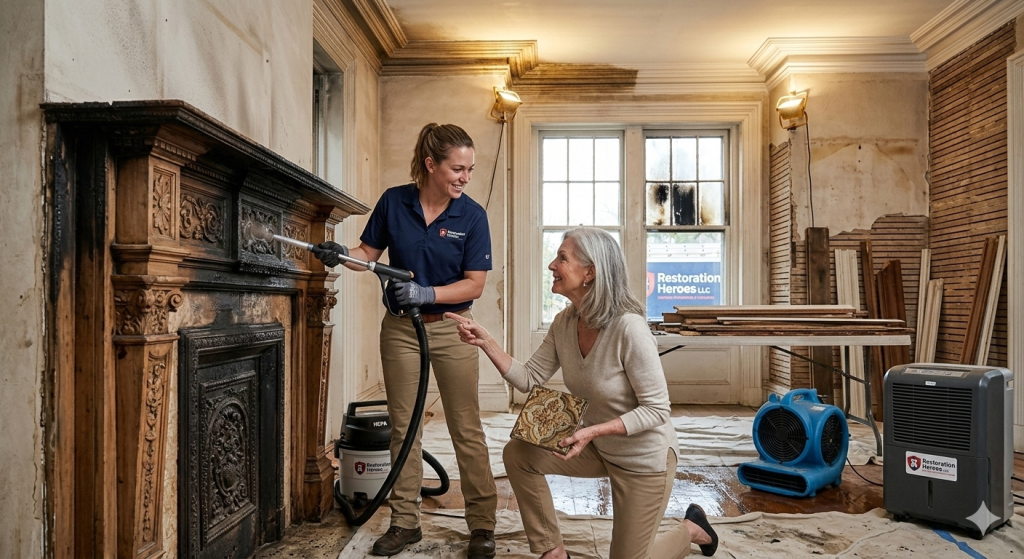
- Original fireplace mantels and stonework.
We use non-invasive moisture detection technology. Unlike standard contractors who might tear down a wall to see if it’s wet, we use infrared thermography to “see” through historic plaster without damaging it.
Step 2: Water Damage in Historic Structures
Water is the greatest enemy of the historic home. Because old homes often lack modern vapor barriers, moisture travels differently through the walls.
The Problem with Plaster and Lath
In modern homes, wet drywall is usually cut out and tossed. In historic homes, we deal with lath and plaster. Plaster is incredibly durable, but it’s also porous. If it stays wet too long, the wooden “lath” strips behind it can swell, causing the plaster to pull away from the wall.
Our Specialized Drying Process
We use “In-Place Drying” techniques whenever possible. By using high-pressure desiccants and targeted heat, we can often save original plaster walls, saving the homeowner thousands in specialized masonry costs. For more on the standards of water restoration, see the IICRC S500 Standard.
Step 3: Fire and Smoke – Preserving the Patina
Fire damage in a historic home is heartbreaking, but smoke is often the silent destroyer. Smoke particles are acidic and can “eat” into original woodwork if not cleaned immediately.
Gentle Cleaning Solutions
We avoid harsh chemicals that might strip the original finish off antique wood. Instead, we use:
- Dry Ice Blasting: This removes char and soot without using water or abrasive sand, preserving the integrity of the wood underneath.
- HEPA Scrubbing: We use advanced air filtration to remove “ghosting” odors from porous historic materials.
Step 4: The Legal Side – Working with Historic Boards
Many historic homes are located in “Historic Districts.” This means any restoration work must be approved by a local board to ensure it meets the Secretary of the Interior’s Standards for Treatment of Historic Properties.
Restoration Heroes LLC acts as your liaison. We provide the documentation, material samples, and “Scope of Work” necessary to satisfy local preservation societies while still getting your insurance claim approved.
Step 5: Reconstruction – The “Renew” Phase
Once the home is clean and dry, the “Renew” phase begins. This is where craftsmanship truly shines.
Matching the Unmatchable
We work with specialized craftsmen to:
- Mill custom wood trim to match original 19th-century profiles.
- Re-point historic brickwork using lime-based mortar (using modern Portland cement on old brick can cause it to crack).
- Source reclaimed materials to replace items that are beyond repair.
The Insurance Hurdle: “Law and Ordinance” Coverage
One major issue with historic homes is that they are rarely “up to code.” If a fire happens, your insurance may only pay to replace it “as it was.” However, the city may require you to add modern wiring or sprinklers.
This is why we look for Law and Ordinance coverage in your policy. According to The National Trust for Historic Preservation, having the right insurance rider can be the difference between a full restoration and a total loss.
Why Restoration Heroes LLC is the Right Choice
Historic homes are Idaho’s legacy. We don’t take the responsibility of restoring them lightly.
- Expertise: We understand the physics of old buildings.
- Respect: We treat your heirlooms like our own.
- Efficiency: We use the fastest drying technology to prevent mold in old, hard-to-reach spaces.
Contact Us Today
If your historic property has suffered damage, don’t let a “demolition-first” company destroy its history. Call the specialists who know how to revive and renew.
- Website: https://restoration-heroes.com/
- Phone: 208-872-4789
- Email: Restorationheroesllc@gmail.com
Career Opportunities
Are you a master carpenter or a restoration technician with a passion for history? We want to hear from you.
- Career Inquiries: Restorationheroesllc@gmail.com
Conclusion
A historic home is a story told in wood and stone. When damage happens, that story shouldn’t end. With the right team, the right technology, and a commitment to preservation, your home can emerge from disaster even stronger than before.
For more information on preserving historic landmarks, visit the National Endowment for the Humanities or contact your local Idaho historic society.
Restoration Heroes LLC: Preserving the Past, Protecting Your Future.